
'Covid-related claims were almost 2.5 times the normal claims size.'

The finance ministry has initiated an internal survey of the faceless regime to examine its effectiveness.

A day after the Reserve Bank of India (RBI) lifted its ban on HDFC Bank on issuing new credit cards, the country's largest private sector lender on Wednesday said it had resources and plans in place to "further reinforce pole position in the credit card segment" and that it would "come back with a bang". "We will aggressively go to the market, with not just our existing suite of credit cards but also new offerings in the form of co-brands and partnerships," Sashidhar Jagdishan, managing director and chief executive officer of HDFC Bank, said in a letter to his employees. The bank's management had earlier indicated that the lender had been sourcing liability customers aggressively over the past few months.

In an indication of easing financial stress among borrowers, the number of unsuccessful auto-debit requests through the National Automated Clearing House (NACH) platform declined in July, reversing a three-month trend that started with the second wave of the Covid-19 pandemic. According to the NACH data, of the 86.4-million transactions initiated in July, 33.23 per cent, or 28.7 million transactions, failed, while 57.7 million were successful. Compared to June, this is a significant improvement in bounce rates.

Unified Payments Interface (UPI), the flagship payments platform of the National Payments Corporation of India (NPCI), made a record in volume and value of transactions in July as digital payments rise in the pandemic. UPI processed a record 3.24 billion transactions in July up 15.7 per cent from June when it processed 2.8 billion transactions. In value terms, in July, the platform processed transactions worth Rs 6.06 trillion, up 10.76 per cent from June.

The non-life insurance industry has received over 1 million Covid-related claims in the first quarter of the current fiscal year (Q1FY22), higher than in the entire FY21, indicating the severity of the second wave of the pandemic. According to the General Insurance Council data, which is not publicly available, non-life insurers have received 1.22 million Covid-related claims so far in FY22 and have settled 944,573 of those worth Rs 9,178 crore. In comparison, they had received 986,366 Covid claims in FY21 and settled 849,034.

The government is exploring legal options, including bringing an Ordinance, to tackle the problem of income-tax litigation on reassessment notices under old, time-barred norms, according to official sources. This has come in the wake of writ petitions filed by companies and individuals in recent weeks to challenge the validity of the notices issued by the tax department between April 1 and June 30 and under the old norms.

Now that almost 10 infrastructure ministries have submitted a fresh list of their core infrastructure assets, the government has realised it stands to make much more money from asset monetisation than previously thought. Two persons in the government said it stood to garner over 30 per cent more than the earlier estimates of Rs 2.5 trillion over the next four years under the National Monetisation Pipeline (NMP). The NMP, which is being prepared by Niti Aayog, is in the advanced stages of finalisation and is expected to be unveiled in August.

The Reserve Bank of India's (RBI's) move to ban Mastercard from issuing new cards for not complying with the local data storage guidelines may hit five private banks, a non-bank lender, and a major card-issuing company. The impact is expected to be felt for a few months as these players transition to other card networks. According to Nomura Research, RBL Bank, YES Bank, and Bajaj Finserv are the ones most impacted by the ban as all their credit card schemes are allied to Mastercard. Among others, IndusInd Bank, Axis Bank and ICICI Bank have 35-40 per cent of their credit card schemes tied to Mastercard, the report said.
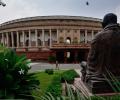
The much-anticipated cryptocurrency bill, however, is missing from the list, reports Shrimi Choudhary.

Maintaining a rapid pace of the vaccination drive and quickly bridging healthcare infrastructure gaps across both urban and rural areas would emerge as the most sustainable stimulus for durable recovery of the Indian economy, says a report by the department of economic affairs.

The probe agency is learnt to have taken possession of multiple physical and digital records during a search operation conducted on the premises of the South Korean firm in Delhi and Mumbai this week.

Unified Payments Interface (UPI), the flagship payments platform of the National Payments Corporation of India (NPCI), touched a record high both in terms of volume and value of transactions in June after a slump in April and May. The platform recorded 2.8 billion transactions worth Rs 5.47 trillion in June, up 10.6 per cent in volume terms and 11.56 per cent in value terms over May. This is in sync with the opening up of the economy as Covid cases gradually came down from its peak in mid-May and lockdowns were eased in various places.
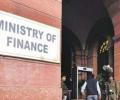
The finance ministry on Wednesday reimposed expenditure curbs on ministries and government departments for July-September quarter. There will be no spending restrictions on the ministries of health, rural development, agriculture, MSME (micro, small and medium enterprises) and railways as part of a two-pronged strategy. "The existing guidelines for expenditure control have been reviewed. "Keeping in view the evolving situation arising out of Covid-19 and anticipated cash position of the government, it is felt essential to regulate Quarterly Expenditure Plan (QEP)/Monthly Expenditure Plan (MEP) of specific ministries/departments for July-September, 2021," the Department of Economic Affairs in the finance ministry said in a notification.

Direct economic stimulus measures such as tax cuts for individuals and industry would have helped to prop up the Indian economy which was hit hard by the lockdowns across several states in India, say economists and corporate leaders. While the measures announced on Monday are focussed more on the supply side, these steps would take a lot of time to move the needle for the economy.

After facing multiple outages that irked the regulator, the country's largest private sector lender, HDFC Bank, is revamping its technology infrastructure by making large scale investments, wherein it is bringing new talent, getting into cloud-native stacks, a shift from the traditional monolithic IT infrastructures, and working with strategic partners for better products and services. The bank management is clear that it will do whatever it takes in line with its growth path to ramp up its technology infrastructure.

'The overall death claims have gone up.'

The National Company Law Tribunal (NCLT) has approved the resolution plan of Twin Star Technologies -- a promoter entity of the Vedanta Resources group -- for the Videocon group. But it has pointed out that the successful resolution applicant is "paying almost nothing" as the amount offered is only 4.15 per cent of total outstanding claim. It noted the hair cut for all the creditors is 95.85 per cent and suggested to both committee of creditors (CoC) and the successful applicant an increase in the payout.

The Goods and Services Tax (GST) Council, chaired by Union Finance Minister Nirmala Sitharaman, will likely consider on Saturday a GST rate cut for Covid-19 relief essentials and drugs for treating the black fungus disease and might leave the vaccines untouched. The meeting is being held following a report submitted by a Group of Ministers (GoM) to the GST Council on Monday. The GoM, set up by the Council on May 28, was mandated to look at tax exemption and concessions on various Covid items including vaccines, drugs, and equipment.

Auto-debit payment bounces have gone up for the second consecutive month in May, emphasising the stress building up due to a halt in economic activities as authorities lock down various parts of the country to stop the spread of the virus in the second wave. According to the National Automated Clearing House (NACH) data, in May, of the 85.7 million transactions initiated, 35.91 per cent, or 30.8 million transactions, failed.
 © 2025 Rediff.com - Investor Information - Advertise with us - Disclaimer - Privacy Policy - Sitemap - Feedback - About us - Terms of use - Grievances